TL;DR
- A pipe-splitting freeze is rare in Paarl, so this is not about wrapping your whole house in heat tape.
- The real winter risks here are exposed outdoor taps on a frost morning, and ageing galvanised pipes in older homes giving up when the cold and the extra use pile on.
- Fifteen minutes this weekend, covered in the checklist below, heads off most of it.
- Know where your main stopcock is before anything bursts.
Every winter, without fail, the call-outs change character. The summer jobs are blocked drains and dripping taps. Come May, June and July they turn into no hot water, damp patches appearing on ceilings, and the occasional burst that has quietly soaked a cupboard for two days. Almost none of it is dramatic, and almost all of it is preventable.
There is a lot of copy-and-paste winter plumbing advice floating around that was written for Johannesburg's Highveld frost or the UK, where pipes genuinely freeze solid and split. Paarl is not that. So here is the version that actually fits the Boland, with the panic taken out and the useful bits left in.
The honest truth about frost and your pipes in Paarl
Let's start by not overselling the danger. Paarl's coldest month is July, when nights bottom out around 6°C and days sit near 18°C. We get frost on the coldest, clearest mornings, but the temperature very rarely stays below zero for the hours on end it takes to freeze a pipe solid inside a wall. If you have lived here a while, you already know this.
So the "burst pipe" you hear about in a Paarl winter usually is not a frozen one. It is one of three things:
- An exposed outdoor tap or thin pipe run catching a genuine frost morning, where there is no wall or roof space to hold a little warmth.
- An old galvanised pipe that was already corroded thin, finally springing a leak when cold water makes the metal contract and heavier winter use runs it harder.
- A geyser under maximum strain, because it works hardest in the exact months everyone wants long hot showers.
Get those three right and you have covered almost every winter plumbing failure we see across Paarl and the Winelands.
Why the older Paarl homes are the ones that crack first
Paarl has a lot of beautiful older housing stock, from the Cape Dutch and Victorian homes around the old town to the solid mid-century houses in areas like Lemoenkloof, Klein Nederburg and out toward Wellington and Dal Josafat. Many of them were originally plumbed in galvanised steel, and that is where winter finds its weak spot.
Galvanised pipe was the standard for decades, and it does not last forever. It rusts from the inside out, and its realistic service life is roughly 40 to 50 years. In a home that is older than that, the pipe wall is already thin and brittle long before anything visible happens on the outside. Cold water contracting the metal, a slight pressure spike, even the vibration of a hard-closing tap, and a hairline weak point becomes a leak.
The tell-tale signs that you are living with tired galvanised plumbing are worth knowing:
- A brownish or rusty tinge to the water, especially the first draw in the morning.
- Water pressure that has slowly dropped over the years as rust narrows the pipe from within.
- Hot water that runs weaker than cold, because the hot lines corrode faster.
- Damp patches on walls or ceilings that come and go.
Worth knowing
If your home is old enough to still have galvanised pipes, winter is not the emergency, it is the reminder. There is no need to panic and re-pipe the whole house in a weekend. But a section-by-section upgrade to copper or modern plastic pipe, starting with the runs that already give you trouble, quietly ends the annual winter surprise.
Your winter-ready checklist
None of this needs a plumber. It is an hour of your own time, most of it this weekend, and it is the single best-value thing you can do for your plumbing all year.
- Disconnect and drain the garden hoses. Water left sitting in a hose and the tap behind it is the most common thing to catch a frost. Unclip them, let them drain, and coil them away.
- Cover the exposed outdoor taps. An inexpensive foam tap cover from any hardware shop does the job. On a night frost is actually forecast, an old towel and a plastic bag tied over the tap works just as well at Paarl temperatures.
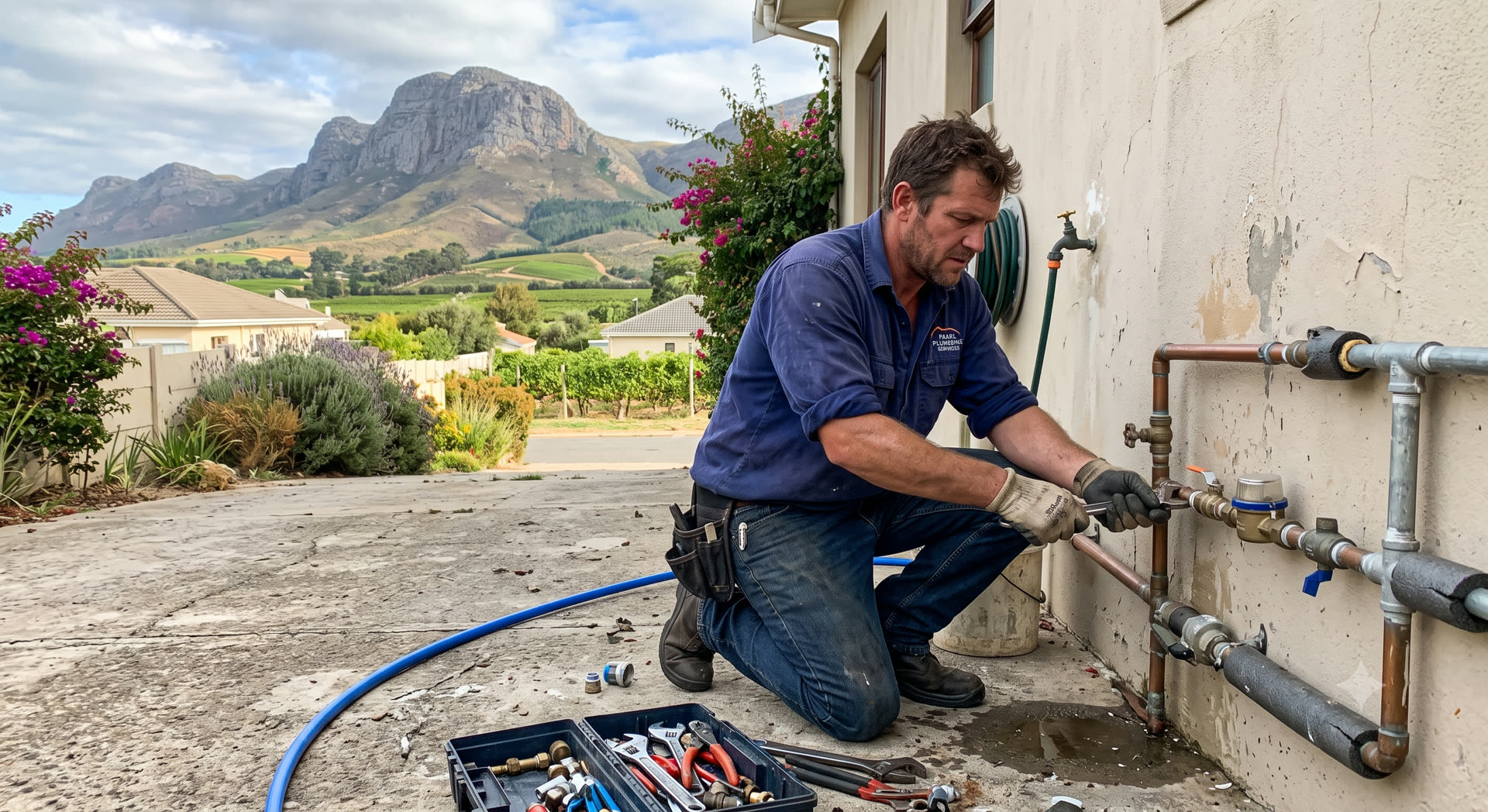
- Find your main stopcock and test it. It is usually at the water meter near your street boundary, and many homes have a second isolating valve where the supply enters the house. Turn it to check it still moves freely. A seized valve is useless in the moment you actually need it.
- Give your geyser five minutes of attention. Check the overflow pipe outside is not steadily dripping, and that there are no damp signs in the ceiling below it. A little geyser insulation blanket cuts your heating bill and takes some strain off the tank. More on this below.
- Walk the roof space and under-sink pipes. On a cold day, run your hand along any pipe in the ceiling, garage or an outside wall. Any that feel icy, or any exposed pipe you can see daylight around, is a candidate for a wrap of cheap foam pipe insulation.
- Note where the damp appears. If a patch shows up on a wall or ceiling, photograph it and note the date. That history is genuinely useful to a plumber and can save an hour of hunting for the source.
Skip the drain cleaner this winter
When a drain runs slow in the cold, it is tempting to reach for a caustic bottle of drain cleaner. On older galvanised or ageing plastic pipework that is exactly the wrong move: the chemicals attack pipe that is already thin, and a slow drain becomes a leaking one. A plunger, or a proper drain clean, is the safer call.
Your geyser works hardest in winter, so give it a look
Geyser call-outs spike across the Winelands the moment the cold sets in, and the reason is simple: the geyser has to heat colder incoming water and everyone is using more of it. A tank that was quietly coping all summer picks winter to fail.
The part that matters most is the temperature-and-pressure valve, the small safety valve that lets a geyser release pressure instead of building up until it splits. If it seizes, pressure has nowhere to go, and that is what turns a geyser into a ceiling flood. It is a two-minute thing for a plumber to check, and worth doing before the coldest stretch rather than after. If your home runs on high municipal pressure, a pressure-reducing valve protects both the geyser and your pipes, which is doubly worth it in winter.
Before you pay for a burst geyser
Most home insurance policies in South Africa cover a burst geyser, and homeowners forget to check first every single winter. Have your policy number ready when you call, and we can work directly with your insurer on the claim.
If a pipe does burst, this is the order to do things
Speed matters far more than know-how here. The goal is simply to stop the water.
- Close the main stopcock you located in the checklist above. This alone stops the flood.
- Switch off the geyser and any water pump at the DB board if the leak is on a hot line or near electrics.
- Open the taps at the lowest point in the house to drain the remaining water down and away from the leak.
- Move what you can out from under the wet area, and call a plumber. A clear description of what happened and where gets the right van and parts to your door faster.
Winter caught you out?
Whether it is no hot water, a damp patch spreading, or a pipe that has finally given up, we cover Paarl and the Winelands with upfront pricing and no shock call-out fee. Tell us what is happening and we will call you back.
Request a Call-out WhatsApp Us